
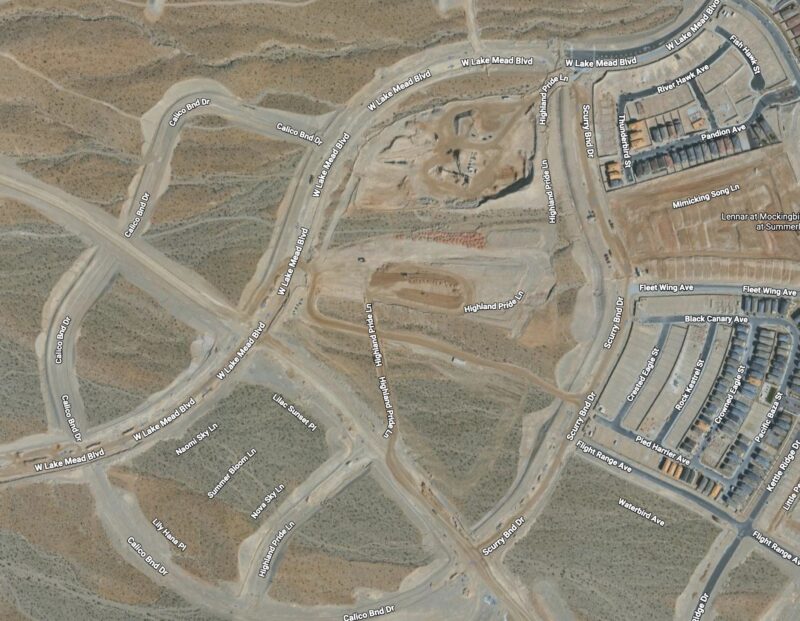
When news broke that homebuilders were paying record prices for residential land in Summerlin, most of the attention focused on one number: the price per acre.
From our perspective, that’s the least interesting part of the story.
The more important question is why experienced builders – companies that invest millions of dollars years before a home is ever sold – continue to compete so aggressively for land in Summerlin.
Builders don’t make decisions based on emotion or headlines. They study long-term demand, infrastructure, consumer behavior, and the future of a community. Long before buyers tour model homes, builders have already determined whether they believe people will want to live there ten or twenty years from now.
That’s why these land sales matter.
Builders Are Buying Into Predictability
Every new community carries some level of uncertainty.
Will amenities be completed?
Will surrounding development support home values?
Will buyers still be drawn to the area years after construction begins?
Summerlin answers many of those questions before the first shovel ever hits the ground.
Over three decades, the community has established a pattern of thoughtful growth. Parks, schools, trail systems, retail, restaurants, employment centers, and recreation have expanded alongside residential neighborhoods instead of lagging behind them. That consistency gives builders something every long-term investment depends on: predictability.
They’re not simply purchasing land. They’re investing in a community with a proven track record.
Scarcity Is About More Than Available Acres
It’s easy to assume there is always another parcel waiting to be developed.
There isn’t.
The remaining land in Summerlin represents some of the final opportunities to build within one of the country’s most successful master-planned communities. Once those neighborhoods are complete, they become part of a finite inventory.
That changes how builders evaluate today’s purchases. They’re not only considering current demand; they’re considering how difficult it would be to replace that opportunity in the future.
Scarcity isn’t created by marketing. It’s created by geography and time.
The Best Builders Follow Buyers—Not the Other Way Around
There’s a common assumption that builders create demand.
In reality, they spend enormous resources trying to understand where demand is already headed.
They study migration patterns, demographic shifts, lifestyle preferences, school performance, recreation, transportation, and employment growth. Their goal is to identify the places buyers will continue choosing long after today’s market conditions have changed.
Summerlin has consistently remained on that list because it offers something increasingly difficult to replicate: a community where the lifestyle has matured alongside the real estate.
That distinction matters.
A beautiful home can be built almost anywhere.
A community that continues to attract residents year after year is much harder to create.
What Buyers Can Learn From This
One of the questions we often encourage clients to ask isn’t, “Do I like this house?”
It’s, “Why does this neighborhood continue attracting investment?”
Builders ask that question before they commit millions of dollars.
Homebuyers should ask it before making one of the largest investments of their lives.
When builders are willing to pay a premium for land, they’re expressing confidence in something much larger than today’s housing market. They’re making a long-term bet on the future of a community.
That doesn’t guarantee home values will only move in one direction. Real estate never works that way.
But it does provide insight into how experienced developers view the long-term strength of the area.
Looking Beyond the Headlines
The recent land sales reported by the Las Vegas Review-Journal aren’t simply another real estate headline. They’re a reminder that some of the strongest signals in a housing market happen long before homes reach the MLS.
For buyers considering Summerlin, these transactions reinforce what we’ve seen firsthand for years. The community’s appeal isn’t tied to a single development cycle or market trend. It’s the result of thoughtful planning, continued investment, and a lifestyle that has proven its value over time.
When builders compete for land, they’re looking years ahead.
As advisors, we believe buyers should, too.